
History of the castle
1466
In 1466 we first hear about the landowner noble Geréb family, who owned the main estate in Fiatfalva, and whose manor house had stood here since the 15th century, on the site of the castle that still stands there today. There are no written records left about this building; it is assumed that in 1588, György Geréb arranged for the renovation of the manor house or the construction of another farm building. In 1625, András Geréb, the captain of the guards of Gábor Bethlen, rebuilt the collapsed manor house in stone, in the form of a castle.
1628
After the death of András Geréb, leaving no heir, the estates were transferred to the treasury, which were donated by Prince Gabriel Bethlen to Moses Székely the Younger, who was the king’s justice in Udvarhelyszék and his fiancée, Judit Lónai.
1635
In 1635, George I Rákóczi granted the entire castle of Fiatfalva, along with the associated estates to Matthias Huszár de Brenhida, his steward the chief judge of Marosszék. The castle was in the possession of Moise Székely, but because of his infidelity it passed to the prince. Matthias Huszár died in 1652, and among his two daughters, Borbála Huszár, or after her first husband, Györgyné Torma, inherited the castle of Fiatfalva. Borbála Huszár and her second husband, János Nemes de Hídvég, held their wedding in the Fiatfalva castle in February 1676.
1714
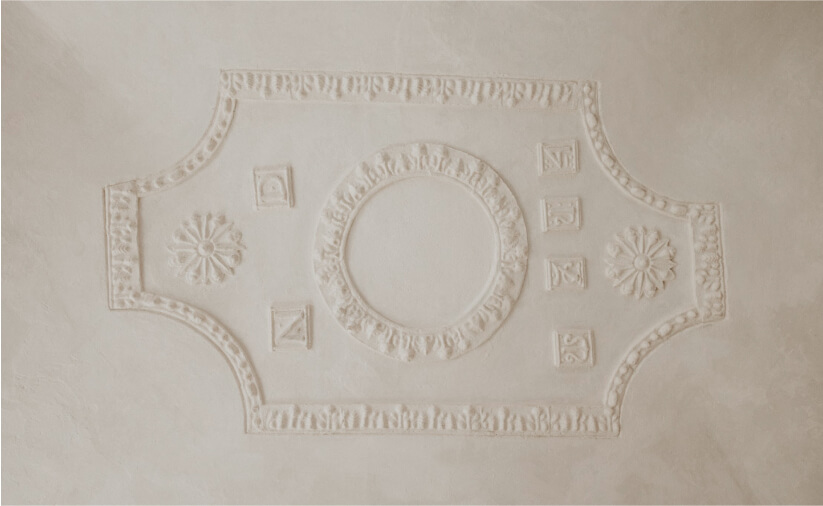
In the spring of 1718, when József Dienes Hermányi visited Fiatfalva, he found the castle in a very dilapidated state. He also mentions the recently completed restoration works, as evidenced by the inscription of the name of Domokos Nemes on the stucco vault of the castle’s courtyard chapel, which is still visible (ND 1714).
1800
1805
1817
1855
1866
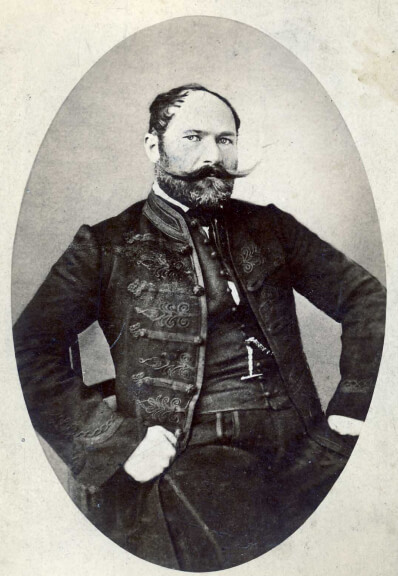
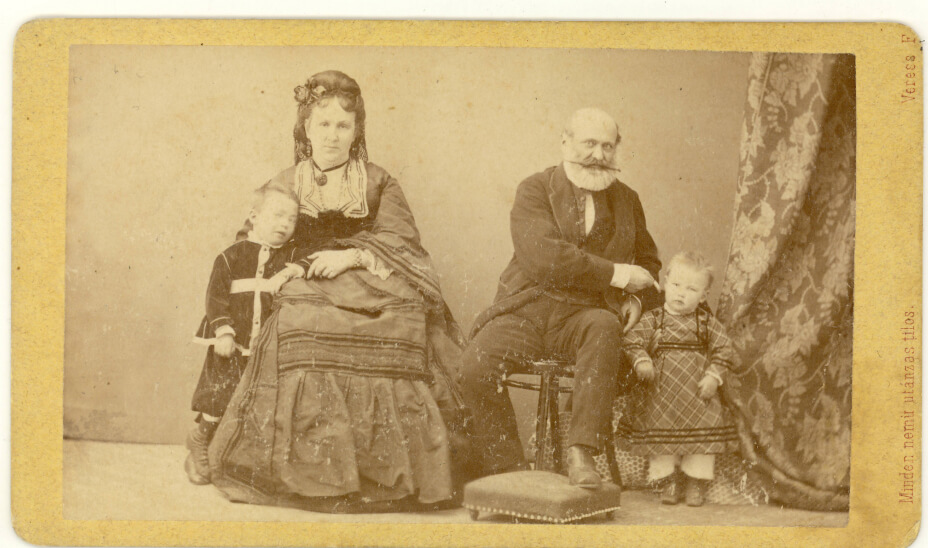
After the death of Antal Zakariás, János Ugron de Ábránfalva, the royal judge of Udvarhelyszék and Baroness Ágnes Györffy de Lozsád purchased the castle in 1866 for 40 000 forints. Following the death of János Ugron in 1882, the estate was inherited by his son, Zoltán Ugron de Ábránfalva, who becomes a member of the National Assembly in 1892. We learn more about the life of the owners of the manor and the farm from periodicals: about the stud farm, consisting of 20 mares and 45 foals, and about the distillery, of which Zoltán Ugron is the majority owner. In 1896, the “Székely Nemzet” reports about the wedding of Zoltán Ugron and Margit Nagy, which took place at Árpád Mikó’s house, presumably because renovations were taking place at the Fiatfalva castle. The condition of the economy is also praised, as József Fodor, the gardener of the Fiatfalva castle, wins a gold medal for the vegetables grown in Fiatfalva.
1928
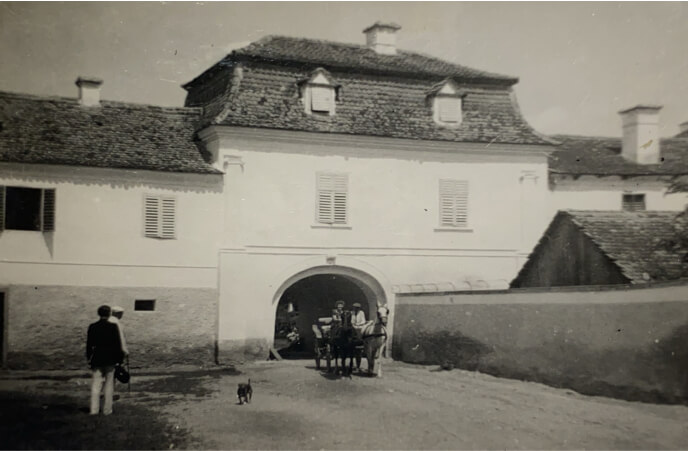
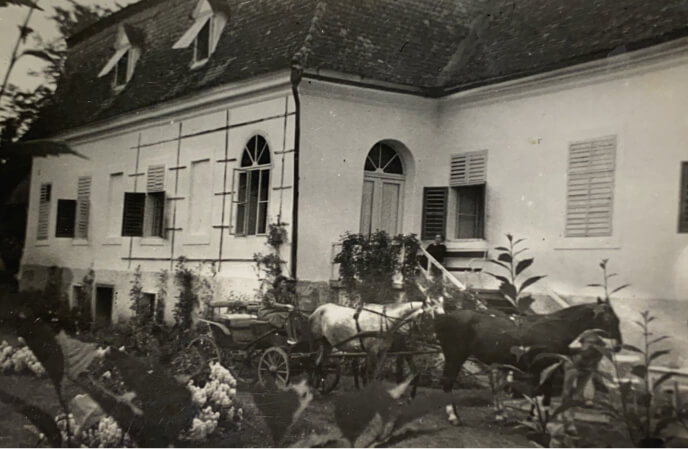
1949
1949
Zakariás Antal
1949-ben – az épületet államosították és az állami gazdaság irodái működtek a kastély épületében.
Érdekesség: Az Ugron-kastély ma is őrzi a a Conscriptio Possessionariae Fiatfalvaensis 1805 leírt épület formáját. Végigjárva termeit, jó néhány részlet, építészeti jellegzetesség még mindig felfedezhető a régiből, ugyanúgy ahogyan azt a Conscriptio Possessionariae Fiatfalvaensis 1805 ismertette, bizonyítva, hogy teljes egészében az 1817-es újjáépítés sem változtatta meg a hajdani kastélyt.
1928
Ugron Zoltán
1928-ban meghal Ugron Zoltán, a mintagazdaságot utódai viszik tovább, öt gyermeke: Anna, János, István, Mária és Pál, és valamennyi fiút neves magyarországi mezőgazdasági akadémiákon képezték ki.
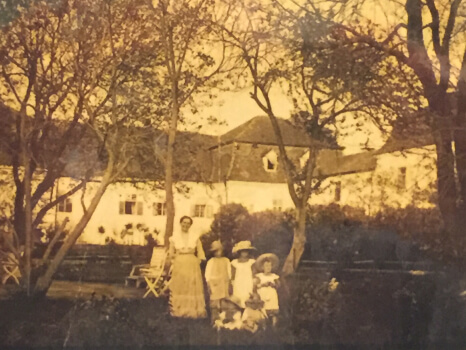
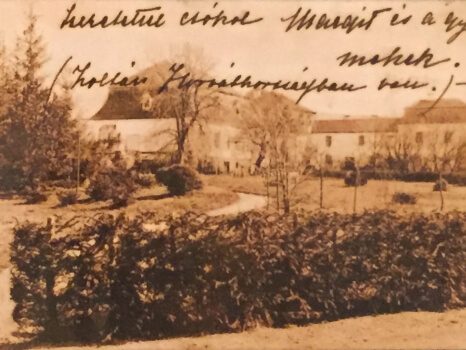
The inhabitants of Ugron Castle in Filiaș (Fiatfalva) lived the ordinary life of the nobility, farming and building accordingly. Simplicity and a life of labour prevailed in the castle. Unnecessary and wasteful expenses were not characteristic of the inhabitants’ lives. The agricultural buildings and gardens found in the courtyard rather suggested organisation for work and self-sufficiency.
Our story…
2005
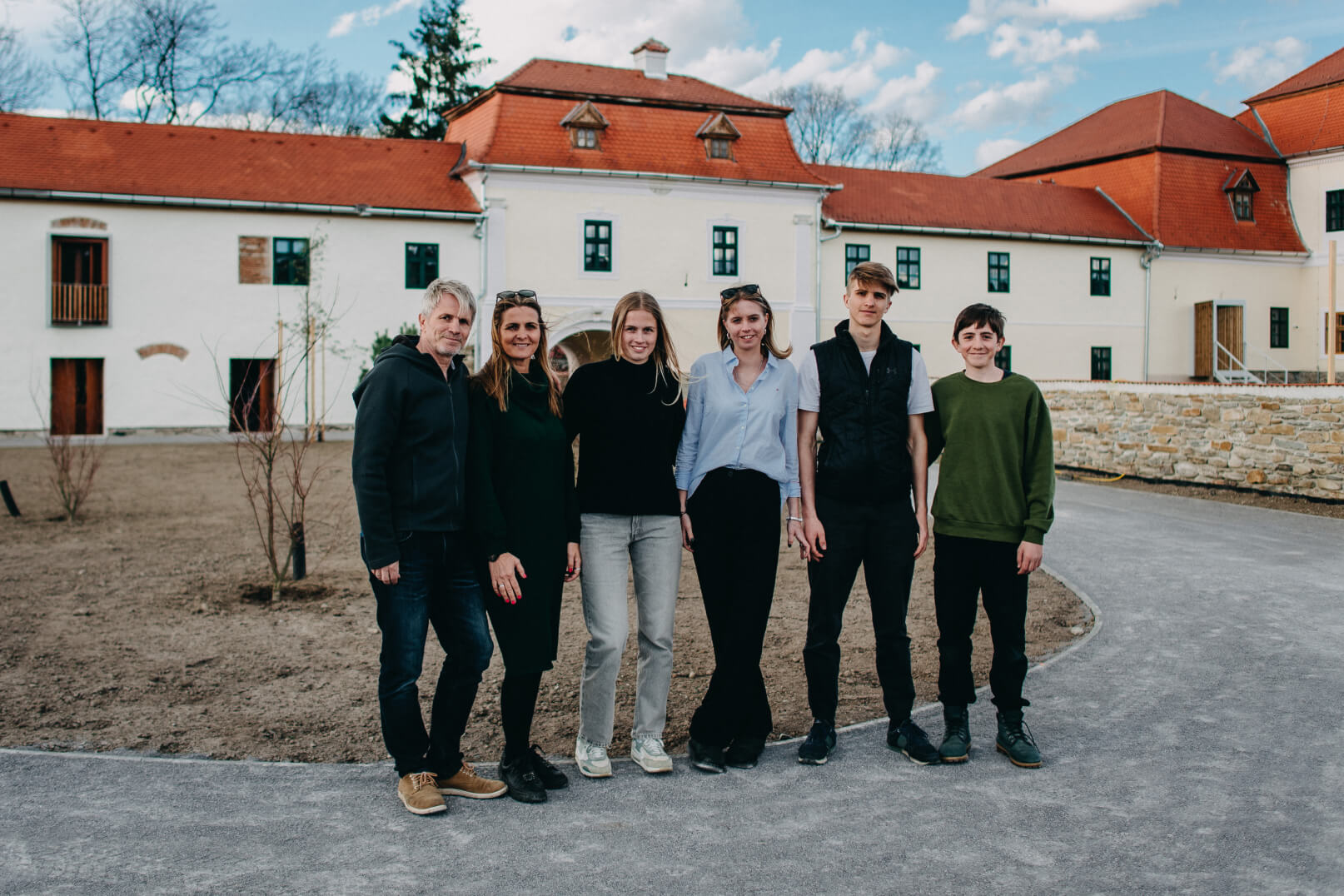
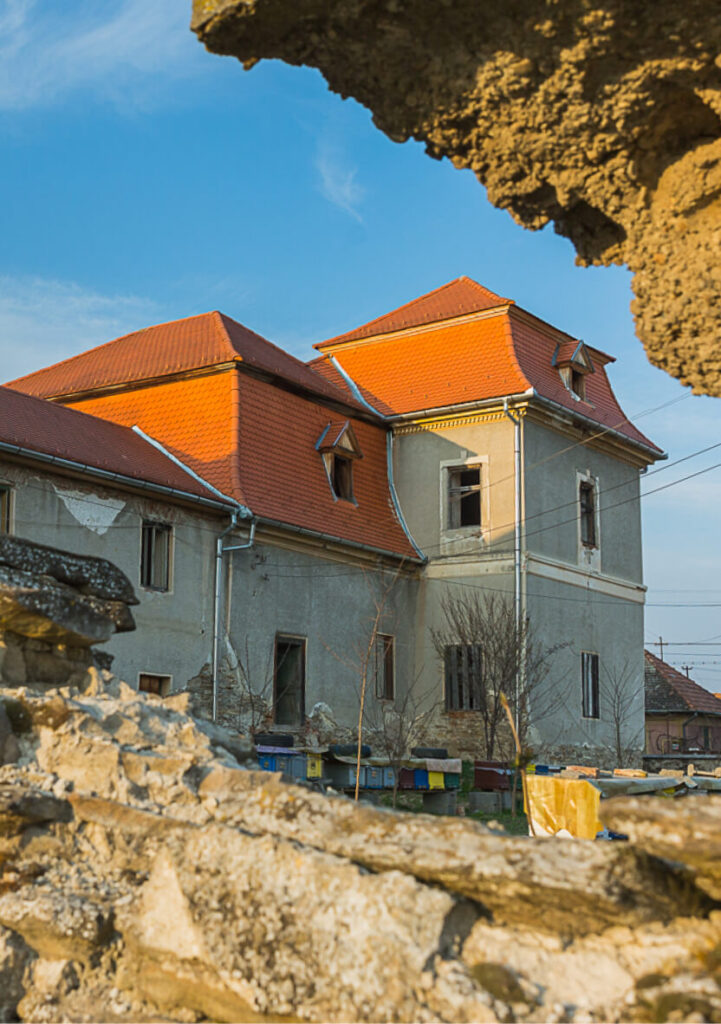
The original owners who regained ownership of the castle didn’t have the financial means to stop the deterioration and decay, so they decided in 2005 to try to sell it within the family. Éva Ugron, a descendant of the Ugron family living in Budapest, learned about the fate of the castle at that time. It was then that she and her husband, Miklós Maróty, decided to purchase and save the castle. With their funding, they managed to halt further deterioration of the castle in 2010 by renovating the entire roof structure and replacing the roofing, and then additional external sources were needed for further developments required for utilization.
2010
The new owners carried out the complete restoration of the castle’s roof structure, marking the first major step in saving the historic building. Over a period of six months, a team of 16 master carpenters worked on the project, repairing and replacing damaged roof and ceiling beams. A reinforced concrete ring beam was installed to strengthen the structure, all 50,000 roof tiles were replaced, and a drainage system was created to divert rainwater away from the building. This intervention proved crucial to the preservation of the castle, effectively stopping further water infiltration and preventing the rapid deterioration of this historic monument.
2019
Following a two-and-a-half-year restoration project, Ugron Castle was carefully and respectfully restored and has since been operating as an exclusive accommodation venue and event destination. Throughout the project, the owners, architects, and craftsmen placed great emphasis on combining modern standards of comfort with the preservation of the castle’s historic character. Original architectural features were carefully restored and intentionally left visible, creating a unique interior where centuries of history blend harmoniously with contemporary design. The castle’s elegant ballrooms were fully renovated, and 12 guest rooms, each with a private bathroom, were created. Among the building’s most valuable architectural features are its beautifully restored private chapel and the historic cross-vaulted cellar. In addition to the restoration of the castle itself, the surrounding estate was revitalized with the creation of a Renaissance garden and the restoration of the English park, completing the castle’s unique historic landscape.
2021-2024
In 2019, the owners of Ugron Castle in Filiaș made the decision to undertake a complete restoration of the property and give it a new purpose.
At that time, the castle was not open to visitors and, due to its condition, was unsuitable for any form of tourism or hospitality. The owners’ vision was to preserve this remarkable historic monument and breathe new life into it by transforming it into a unique destination where cultural heritage and contemporary hospitality coexist in harmony.
Reference: Sándor-Zsigmond, Ibolya. The Lifestyle of the Inhabitants of the Castle of Filiaș Based on an 1805 Conscription. Acta Siculica, 2009, pp. 605–622.